
Why I Stopped Believing in Most of How Languages Are Taught
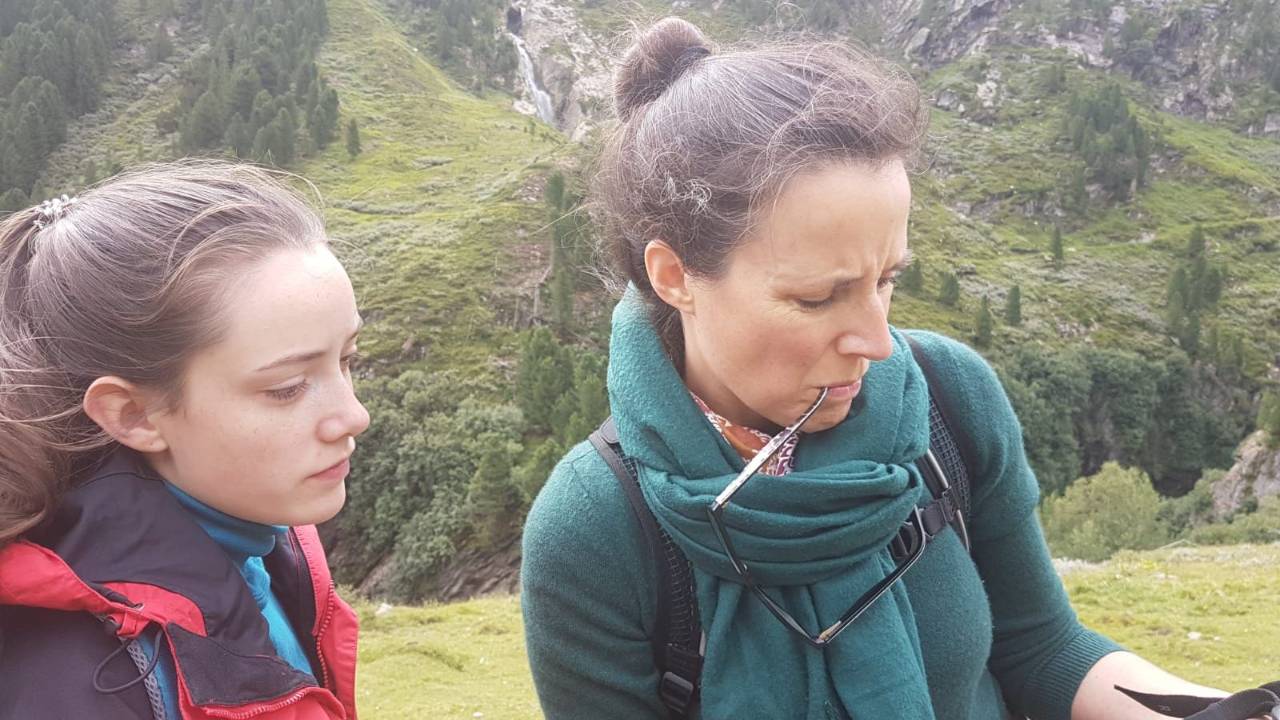
Hi, I'm Christine. I've been teaching languages since 2005, and somewhere along the way I stopped believing in most of how it's done.
I don't say that lightly. I have spent more than thirty years studying the psychology of how people acquire and develop language, and since 2005 I have been accumulating practical experience: teaching, and then designing programs of my own. In 2007 I opened my first school. I know the classroom from the inside.
The question that wouldn't go away
What changed my mind was a forest.
English in Nature was a program I developed and ran, on and off, between 2012 and 2023: mostly German children, outdoors, learning English without a single thought about grammar. They needed to use English to find the thing, build the thing, or convince a friend of something, so they used it. Nobody told them they were in a language lesson. They just were.
It worked so well that it bothered me. Why did this work so well, when a classroom so often doesn't?
Answering that question properly took years. The answer became DELA, a framework for creating the conditions under which acquisition actually happens, whatever your age. ExperioLingo is what that turned into.
In the meantime, I was also the learner
There is this other part of the story, and it is less tidy. Long before English in Nature, I'd arrived in Germany. In 2004, I made the move with a Goethe course and four university courses behind me. In 2014, I received my großes deutsches Sprachdiplom from the Goethe Institut in Frankfurt.
Ten years. Was it full immersion? Not quite. It was close, but only because I had intentionally cut myself off from the English-speaking world as much as possible. I simply spent more time with people who either didn't speak English (kids and adults) or didn't want to.
Since it was my job, much of my time was still spent in English. The kids I taught English to, beginning in 2007 when I founded my first language school, loved to "play" in English. The adults I taught English to equally, if just a little less wildly. The rest of the time I tried my best to spend as much time as I could with people who preferred to speak German with me, regardless how badly I mangled their language. That was key. It was humbling, to say the least.
As a language trainer, I was well aware of what I needed to do to keep the conversation at my level to not over-challenge myself. I had a lot of chances to talk to children who hadn't yet been confronted with "school English", including my own kids. The children--all of them--taught me a lot more than anyone else, and were probably the most patient of all my teachers. They'd just wanted to talk about everything, to joke around, to tell and hear stories, and to play. These interactions were a big source of inspiration; I came up with games, songs, craft activities and stories for us to use for language-learning. And I used the same techniques for myself, just in reverse. It worked well. But I also had to test it on others, in every age group.
It wasn't exactly scientific research. I know the difference, having worked in research labs for over 6 years in Boston before moving to Germany. It was just my way of trying out ideas. And I honestly just enjoyed it, especially when my course participants gave me such positive feedback. Kids and adults alike.
Sooner or later, without having taken a single German course after 2004, I reached full C2-level German language proficiency. My German language experience was far more valuable than my German language knowledge. By 2022, after 18 years of immersion, I had reached a level of comfort speaking German that I was asked by an American who I had just met how I had been able to learn English so well. Taken aback, I patiently explained that I'd learned it from birth. It took a minute for me to realize that she'd heard me speaking German and thought I was a native speaker. I was used to the other question: how I got so good at German. We laughed. Once she realized that I was American and had grown up in the States, she asked if I could teach her "to speak German like that".
That is the experience I build around now. I am an English speaker who learned to live her life in German, and I know exactly which parts of that are hard. I promise you it isn't the grammar.
What I do differently
- I start from the conditions under which people acquire language, not from a syllabus.
- I treat the surrounding life (the shops, the offices, the neighbours) as part of the curriculum.
- I don't ask you to study more. I ask what would make the next real situation survivable, then repeatable, then yours.
I live in Wiesbaden now, which is where this all started--at a friendship festival. The next posts explain the framework and how it works in practice.
If you recognize yourself in any of this, you're exactly who I had in mind.
Stay connected with news and updates!
Join our mailing list to receive the latest news and updates from our team.
Don't worry, your information will not be shared.
We hate SPAM. We will never sell your information, for any reason.